
KillSec: From Hacktivist Roots to Ransomware Franchise

Full Disclosure
First things first full disclosure. I don’t promote or glorify ransomware groups. My role is to investigate and report, and I try to stay as unbiased as possible. As a cybersecurity researcher, I need to understand threats to explain them, and I share these findings so others can prepare.
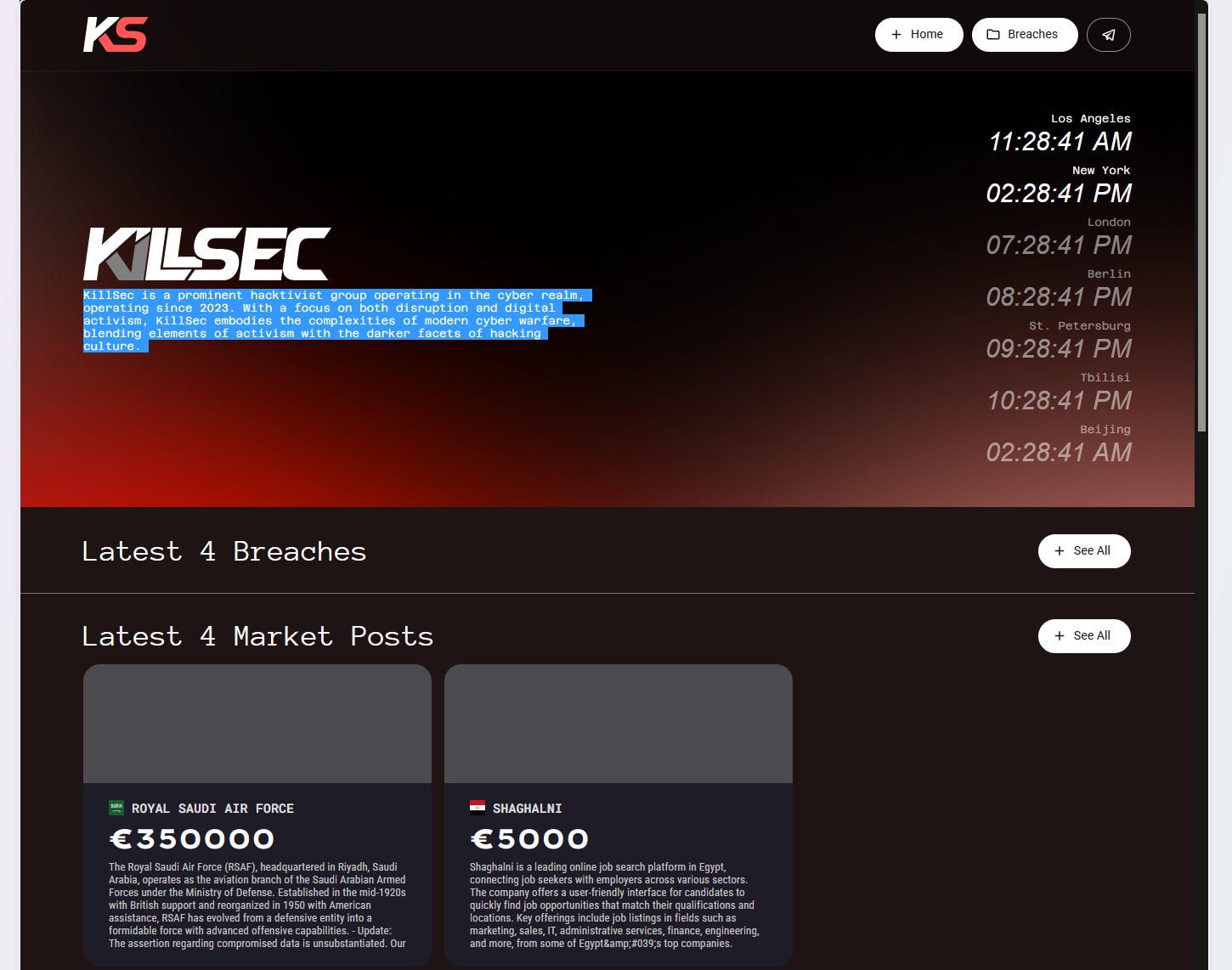
This week, after tracking several active groups, one stood out for both its ideological posturing and criminal pragmatism: KillSec, also known as KillSec3. It took some digging to piece their profile together, but the picture that emerges is striking.
From Street Protests to a Ransomware Storefront
KillSec first appeared in late 2023, recruiting openly on Telegram for “network penetration, web-penetration, malware creation.” They styled themselves as an offshoot of the Anonymous movement, cutting their teeth on DDoS and defacement attacks against government sites in India, Poland, and Brazil.
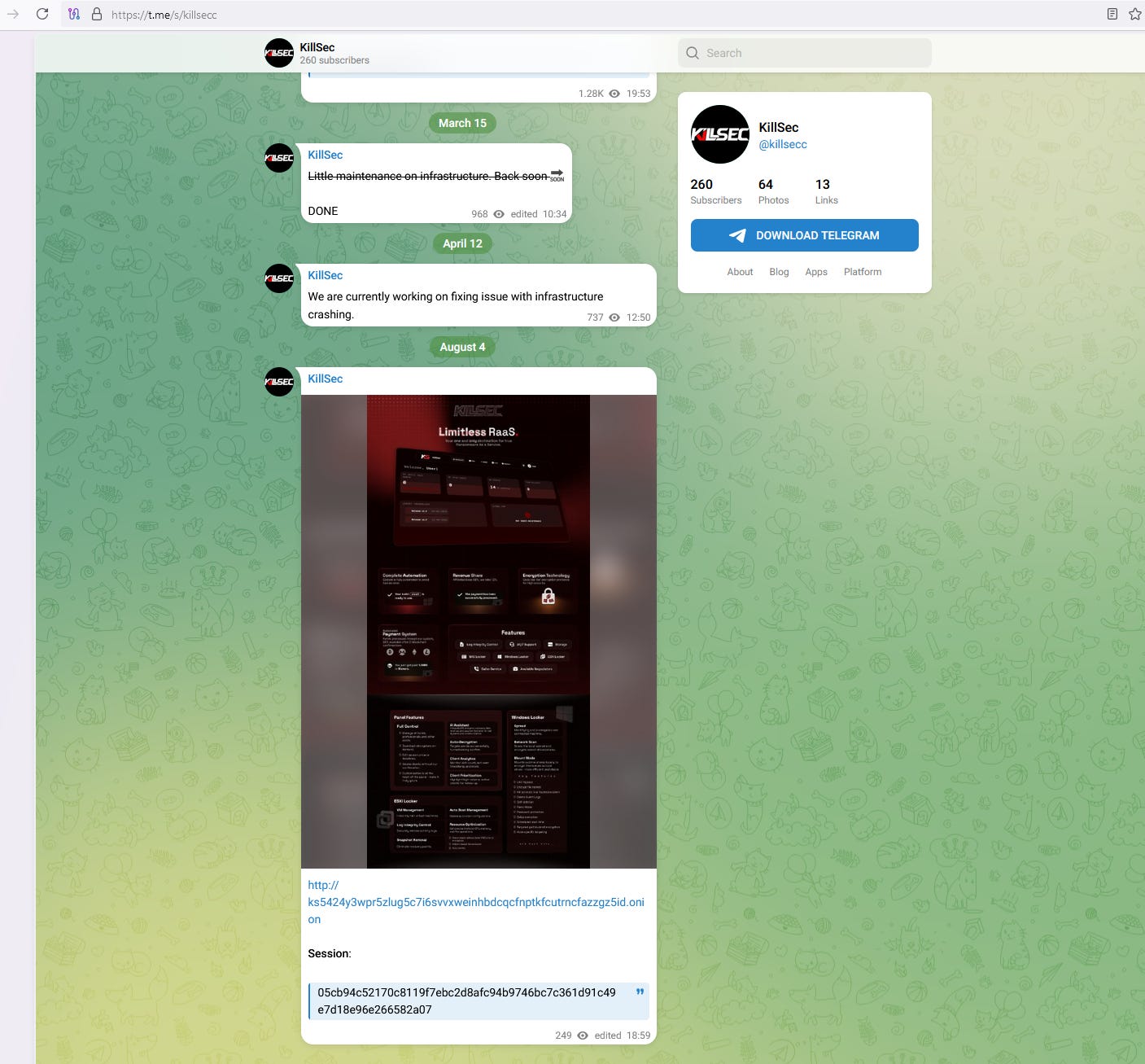
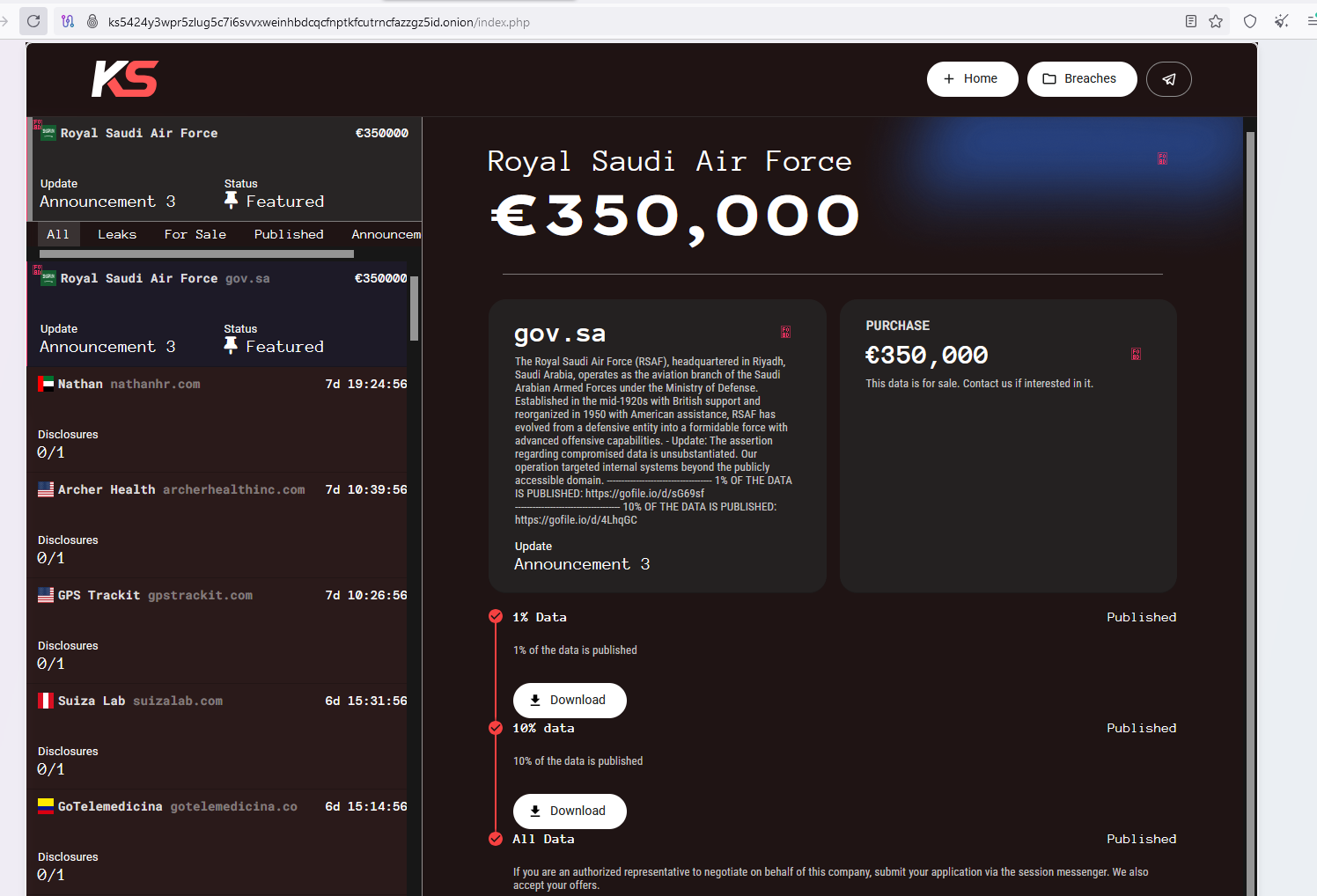
By mid-2024, they pivoted hard. The group rolled out a Ransomware-as-a-Service (RaaS) portal, complete with affiliate log-ins, dashboards, and custom lockers for both Windows and VMware ESXi systems. It was less activism, more business.
Still, they never dropped the rhetoric. Their statements talk about “digital activism” and the “complexities of cyber warfare.” But the victim list tells another story: banks, hospitals, insurers, and tech companies. Profit, not politics, drives the operation.
Tools of the Trade
KillSec’s arsenal isn’t cutting-edge, but it works:
Encryption: AES-256 in CBC mode, with keys wrapped in RSA-2048. No public decryptor exists.
Exfiltration: Data is siphoned using tools like MEGASync and Rclone before systems are locked.
VMware attacks: Their ESXi variant unmounts and encrypts virtual machines, hitting critical infrastructure directly.
Evasion: They terminate backup and antivirus processes (Veeam, Acronis, Sophos), delete shadow copies, and clear event logs.
In short, they combine commodity malware tactics with disciplined execution—a model accessible to affiliates but still dangerous for victims.
A Growing List of Victims
KillSec claims over 199 victims to date. Some of the more notable:
Hexicor (Australia) – Client folders, SSL certificates, and hashed passwords leaked.
Ping An (China) – Data on millions of customers offered for sale.
Belfius Bank (Belgium) – 300,000 customer records dumped after refusal to pay.
Skyward Specialty Insurance (USA) – Policy data stolen and ESXi servers encrypted.
Yassir super-app (Algeria/France) – Source code and driver databases advertised to competitors.
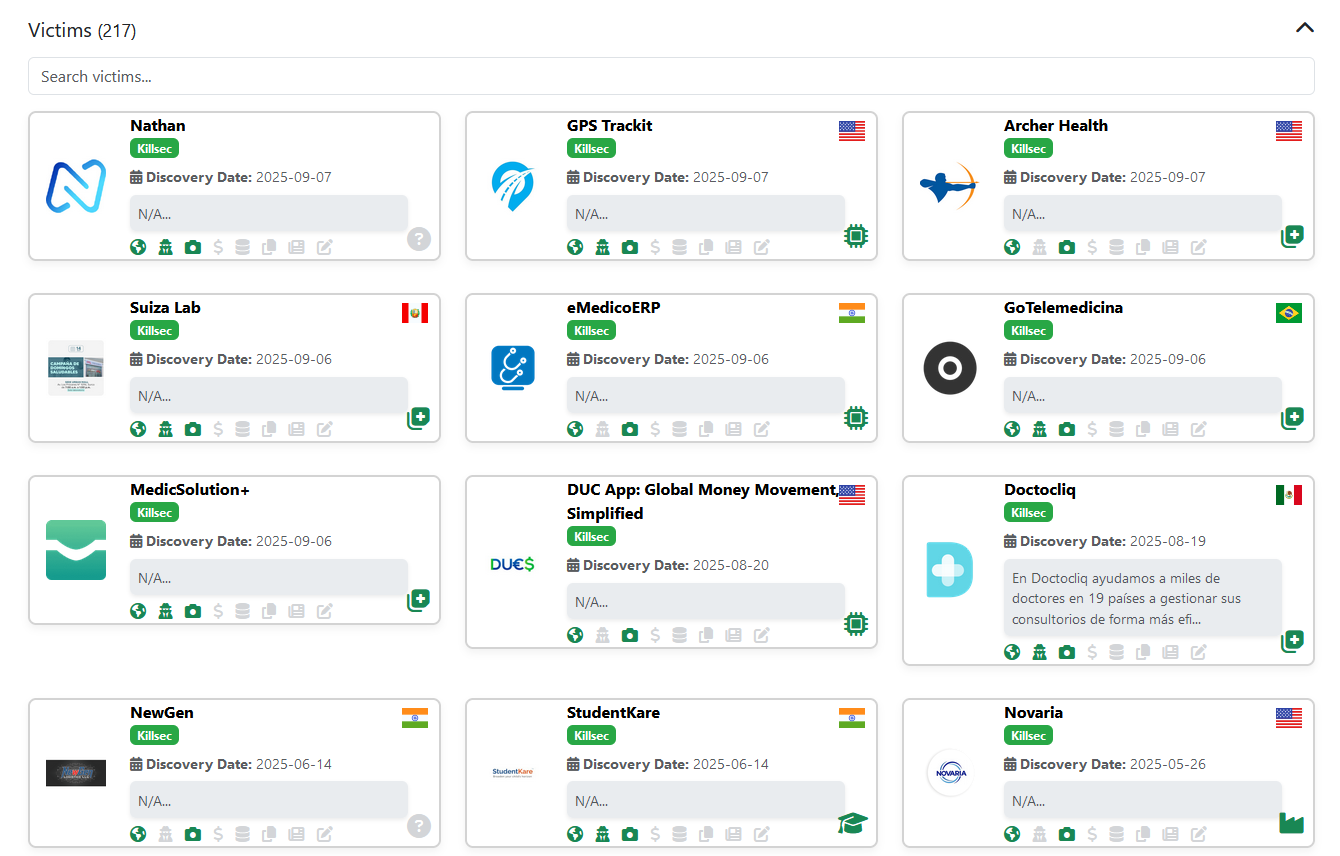
Ransom demands are rarely disclosed, but auctioning stolen data has become a key revenue stream, doubling profits even when encryption doesn’t land.
Why Defenders Should Care
KillSec isn’t the most technically advanced group, but its blend of hacktivism and ransomware makes it unpredictable. They’ve hit hospitals, charities, and critical services—targets even big-name cartels avoid. Their pace is accelerating, with some days showing over a dozen victims posted at once.
For defenders, the key lessons are simple:
Patch internet-facing applications quickly—KillSec still leans heavily on known CVEs.
Keep segmented, offline backups—they go after cloud and NAS backups early.
Monitor for service stoppages—mass halts of Veeam, SQL, or Windows backup tools are red flags.
Rehearse recovery—assume no decryptor will appear.
The Bottom Line
KillSec may market itself as a hacktivist collective, but its operations look like any other ransomware cartel. The slogans are political; the actions are financial. With nearly 200 victims and counting, their hybrid model—part activism, part crime—shows how blurred the line between ideology and profit has become in cybercrime.
For organizations, that means one thing: don’t dismiss them as “just activists.” They’re running a business, and your data may be next on the shelf.